ANCC Magnet classification brings a specific meaning. It is acknowledgment, awarded by the American Nurses Credentialing Center, for health care companies that satisfy Magnet requirements for nursing quality and quality patient outcomes. That description sounds uncomplicated, however the work behind it is anything however easy. The classification process asks a company to do more than gather files or polish a story. It asks leaders to show, with evidence, how nursing practice is built, supported, enhanced, and measured across the enterprise.
That is where thoughtful Magnet ® Consulting can help. Not by producing a story, and not by dealing with classification as a branding project, however by assisting a company translate the requirements correctly, arrange evidence responsibly, and prepare its leaders and groups for an extensive appraisal process. The very best consulting support brings structure to a demanding journey without changing the hard internal work that Magnet requires.
What Magnet classification really recognizes
A surprising quantity of confusion begins with the basic terms. Magnet Acknowledgment Program ® is the ANCC program that recognizes healthcare organizations for nursing quality and quality client results. Its roots go back to a 1983 study of so called "magnet" health centers. The program name officially changed to Magnet Acknowledgment Program ® in 2002. Those historical information matter due to the fact that they discuss why Magnet still carries so much weight in nursing management circles. It is not a pattern label. It is a long-standing structure that has developed over time.
Organizations often discuss the "Journey to Magnet Excellence ®, "which phrase is not casual shorthand. It is ANCC's trademarked phrase for the path toward designation. The journey matters since Magnet is not merely a one-time submission. ANCC distinguishes between classification and redesignation. If an organization has actually already made Magnet Recognition, it must pursue redesignation to continue being recognized. That single difference changes how a consulting engagement should be approached. A newbie applicant requires assistance developing a foundation. A redesignating organization needs assistance showing sustained efficiency, disciplined tracking, and continued progress.
Another point that deserves clarity is ownership. ANCC is the credentialing body through which the American Nurses Association uses these programs, and Magnet status is awarded by ANCC. Any consulting company, advisor, or independent professional operating in this space needs to anchor every suggestion to ANCC's program structure, requirements, and language. If the advice wanders from that center, the organization usually spends for it later in rework, weak documentation, or lost effort.
The structure that forms everything
The existing Magnet framework is arranged around five elements of the empirical model. Those elements are Transformational Management, Structural Empowerment, Exemplary Professional Practice, New Understanding, Innovations, & & Improvements, and Empirical Outcomes.
That design did not appear out of thin air. It developed from the earlier 14 Forces of Magnetism. After a 2007 analytical analysis of appraisal scores, the 2008 conceptual model organized those forces into the 5 current components. For organizations preparing for classification, that evolution matters because it explains the balance Magnet anticipates. The model is broad enough to capture leadership, professional practice, innovation, and results, yet particular enough to need disciplined evidence in each area.
Good Magnet ® Consulting begins with this framework, not with a generic task plan. An advisor who comprehends the design can help an organization see where its proof is strong, where it is fragmented, and where it may be explaining great objectives without revealing quantifiable outcomes. That difference is where numerous teams battle. Leaders frequently know they are doing significant work. The obstacle is proving that work in the format and structure ANCC expects.
Why companies look for speaking with support
Some companies have deep internal knowledge and still pick outdoors assistance. Others are starting practically from scratch. Both can benefit, though for different reasons.
A mature nursing leadership group may not need somebody to discuss Magnet principles. What it might require is a knowledgeable external eye that can find spaces the internal group can no longer see. When individuals have actually lived with a job for months or years, weak shifts in between stories, missing out on context in proof, and inconsistent terminology can vanish into the wallpaper. An outside specialist frequently notices those issues in a single read.
A less skilled organization faces a various issue. It might have strong nursing practice however limited familiarity with ANCC's written paperwork expectations. ANCC requires applicants to send written documentation using Sources of Evidence, or proof requirements, connected to the Application Manual. That indicates the task is not just assembling binders of accomplishments. It is matching organizational proof to particular proof requirements in a disciplined way.
The practical value of speaking with assistance typically falls into a couple of locations:
- interpreting the Magnet structure and evidence expectations accurately organizing composed documents around Sources of Evidence helping leaders compare anecdote, activity, and verifiable evidence preparing the organization for appraisal-related concerns and review supporting connection between initial classification work and redesignation planning
Each of those points sounds procedural. In practice, each one can identify whether an application informs a meaningful story or ends up being a tiring collection exercise.
The common mistake, treating Magnet like a composing project
The most expensive misinterpreting I see in companies pursuing Magnet is the belief that the main obstacle is writing. Composing matters, naturally. Weak writing can obscure strong work. However the deeper difficulty is evidence integrity.
An organization may have an engaging nursing culture, engaged leaders, shared governance structures, innovation efforts, and meaningful outcomes, yet still struggle if those aspects are not connected plainly to the Magnet design. Another company might produce sleek prose that sounds impressive however does not line up securely enough with the composed paperwork requirements. Magnet appraisal is not a literary competition. It is a standards-based review.
That is why knowledgeable Magnet ® Consulting typically starts by slowing groups down. Before preparing, the organization needs to address a set of difficult internal concerns. Exactly what are we claiming? Which part does it support? What evidence shows that this is developed practice instead of a separated example? Are we describing a procedure, an outcome, or both? Have we revealed development with time where required? If a claim is strong in conversation however thin on documents, the issue is not phrasing. The concern is readiness.
I have seen organizations conserve months of effort by facing that reality early. It is simpler to identify a missing proof chain in preparation than to find it midway through writing, when leaders are already emotionally dedicated to a narrative.
What the consulting procedure ought to look like
Consulting needs to not produce reliance. It needs to develop order, realism, and internal capability. The strongest engagements generally feel less like outsourcing and more like disciplined partnership.
Early work frequently centers on orientation to the Magnet Acknowledgment Program ® and the organization's current state. If the internal team is unfamiliar with the development from the 14 Forces of Magnetism to the five-component empirical model, that history can assist them analyze why proof must be well balanced across domains. Groups also require clarity on where ANCC's formal requirements live, particularly the Application Handbook and the Sources of Evidence structure that drives written documentation.
From there, the work ends up being practical. Evidence needs to be collected, sorted, and evaluated against the standards. Gaps have to be named truthfully. That can be unpleasant. Sometimes a department knows its work belongs in the submission, however the proof is too narrow or the results too immature. Other times a company underestimates a strength due to the fact that the work feels normal internally. Consultants earn their keep by making those judgment calls carefully, without overstating and without overlooking.
At this phase, the best experts likewise bring discipline to language. Terminology must mirror ANCC's framework. Claims should be concrete. A sentence like "leadership highly supports nursing excellence" might sound favorable, however it is too broad to carry weight by itself. It requires proof that demonstrates how transformational leadership is expressed and what results followed. Accuracy is not scholastic. It is the distinction in between asserting quality and demonstrating it.
Written documentation is where method becomes visible
Every serious Magnet effort eventually collides with the written documentation reality. ANCC's crosswalk materials describe the composed documents evidence requirements for applicants, and those requirements are connected to the Application Handbook. That suggests there is an official architecture to the submission. Organizations disregard that architecture at their peril.
In weaker projects, teams collect documents first and map later. In stronger tasks, they map initially and collect with purpose. That single change reduces duplication, confusion, and last-minute scrambling. It likewise requires better executive choices. If a needed location does not have adequate evidence, leaders can decide whether to reinforce the underlying work over time or reevaluate how they are framing the application.
A practical example helps. Expect a group wants to highlight a development effort. The impulse may be to display the idea itself, the enthusiasm around it, and the favorable response from staff. But under the Magnet design, particularly under New Knowledge, Developments, & & Improvements, the description has to move beyond enjoyment. What changed? How was the change executed? What evidence reveals improvement? Without that development, the material stays a nice story rather than persuasive evidence.
Consulting support works here since companies are often too near to their own efforts. Internal champions can inform the history magnificently. A specialist asks the blunt concerns that appraisal reviewers will successfully ask in their own method: What is the evidence? How does this link to the part? Why does this example matter more than another one?
The function of empirical outcomes
Of the 5 Magnet elements, Empirical Outcomes tends to sharpen the conversation rapidly. Outcomes make everyone more exact. Culture, structure, and leadership are important, but Magnet's model makes clear that quantifiable outcomes matter. ANCC describes Magnet as acknowledgment for nursing quality and quality patient results. Those words are central, not decorative.
That does not indicate every significant nursing achievement can be lowered to a single number. It does imply an organization ought to have the ability to show that its professional environment and nursing practices translate into observable efficiency. Strong consulting support assists leaders withstand two opposite mistakes here. One is straining the submission with information that does not have a clear story. The other is leaning too heavily on narrative since the team is uncomfortable making a direct outcomes case.
Data without analysis can seem like mess. Analysis without credible outcomes can feel thin. The work is to bring them together.
This is also where redesignation work typically differs from novice classification. A novice applicant may be proving that the Magnet design is truly embedded. A redesignating company must also show that recognition was not a high point followed by drift. ANCC's distinction in between designation and redesignation is more than administrative. It shows the expectation that nursing quality is sustained, monitored, and renewed.
Timing, costs, and the discipline of planning
No major guide would overlook the practical side. ANCC posts different Magnet application and appraisal fee schedules, including an online application fee and appraisal evaluation fees due at written file submission. The precise figures and timing can change, so companies should constantly depend on present ANCC information when budgeting and scheduling.
That stated, the strategic lesson is steady. Fee timing affects readiness preparation. It is risky to treat the written document submission date as a motivational target if the underlying evidence review has not matured. Financial milestones and submission turning points must support readiness, not force it. A hurried application can cost more than a delayed one if it results in comprehensive rework or an underpowered submission.
Consultants can be particularly handy in this location because they tend to see planning distortions early. A leadership team may aspire to reveal a timeline publicly. Nursing leaders may feel pressure to meet that timeline even when paperwork mapping is insufficient. A good consultant will not simply cheer the date. They will ask whether the organization is sequencing the work in a way that appreciates both ANCC's requirements and the truth of internal operations.
What to try to find in Magnet ® Consulting support
Not all seeking advice from assistance is equivalent, and companies need to be selective. The ideal fit is not necessarily the flashiest discussion or the most aggressive promise. In this field, caution is typically a virtue.
Look for a consultant or firm that shows these qualities:
- fluency in ANCC's Magnet Recognition Program ® language and structure a disciplined technique to Sources of Proof and composed documentation comfort identifying gaps without dramatizing them respect for trademarked program terms and main Magnet logo design rules a clear understanding that designation and redesignation require different preparation lenses
That final point is worthy of emphasis. Some consultants treat every client as if the exact same roadmap applies. It does not. A first-cycle organization frequently requires significant architecture, education, and proof mapping. A redesignating organization may require a sharper focus on interim tracking, connection, and sustained outcomes. ANCC also supplies digital tools and guides to support the appraisal procedure and interim monitoring during designation, and a notified expert needs to understand how those tools fit the wider effort.
The internal group still brings the work
One truth worth saying plainly is that consulting can not alternative to leadership ownership. Magnet acknowledgment comes from the company, not to the specialist. That implies the primary nursing officer, nursing leaders, and crucial stakeholders must remain active stewards of the process. When a job is handed off too completely, the end product typically sounds detached from day-to-day practice. Reviewers can sense when a submission has been over-produced however under-owned.
The strongest organizations utilize consulting assistance to reinforce internal positioning. They utilize external proficiency to sharpen meanings, structure proof, pressure test drafts, and prepare teams. However the material still originates from the organization's genuine practice environment. That matters ethically, operationally, and strategically. If the internal team can not confidently discuss its own Magnet story, then the story is probably not ready.
I have seen the difference in room after space. In one company, leaders delayed every tough concern to the expert. The job moved, but ownership remained shallow. In another, the consultant worked more like a disciplined editor and guide. The internal team disputed evidence options, improved its claims, and learned the structure deeply. The second group not only produced more powerful documentation, it likewise constructed self-confidence that lasted beyond the application cycle.
Magnet as a roadmap, not simply a result
ANCC explains the program as supplying a roadmap to nursing quality. That phrase matters because it shifts the value of Magnet beyond acknowledgment alone. Designation is necessary. It indicates that a company has met ANCC's requirements. It likewise carries useful ramifications, including the right https://marcofbkh605.zenbloomer.com/posts/magnet-r-consulting-from-the-14-forces-of-magnetism-to-five-elements for designated organizations to use official Magnet logos under hallmark guidelines. But the deeper value frequently lies in the disciplined reflection the framework requires.
The five elements ask companies to link leadership, empowerment, professional practice, development, and results in a coherent method. That is requiring work. It reveals where nursing culture is strong, where structures are unequal, and where performance needs clearer evidence. For some companies, that insight is as valuable as the classification itself because it provides nursing management a sharper operating model.
This is another factor thoughtful Magnet ® Consulting can be worth the investment. Excellent advisors assist companies use the process to discover, not simply to submit. They help groups avoid the trap of doing a heroic one-time push that leaves no durable system behind. Instead, they motivate practices that support ongoing monitoring, especially essential for redesignation and for protecting the integrity of Magnet acknowledgment over time.
A disciplined course forward
For companies thinking about Magnet designation, the most intelligent first relocation is typically not writing, and not arranging an event date. It is taking an honest stock of readiness versus the Magnet structure and the composed paperwork requirements tied to ANCC's Application Manual. That stock should be sober, evidence-based, and without wishful thinking.
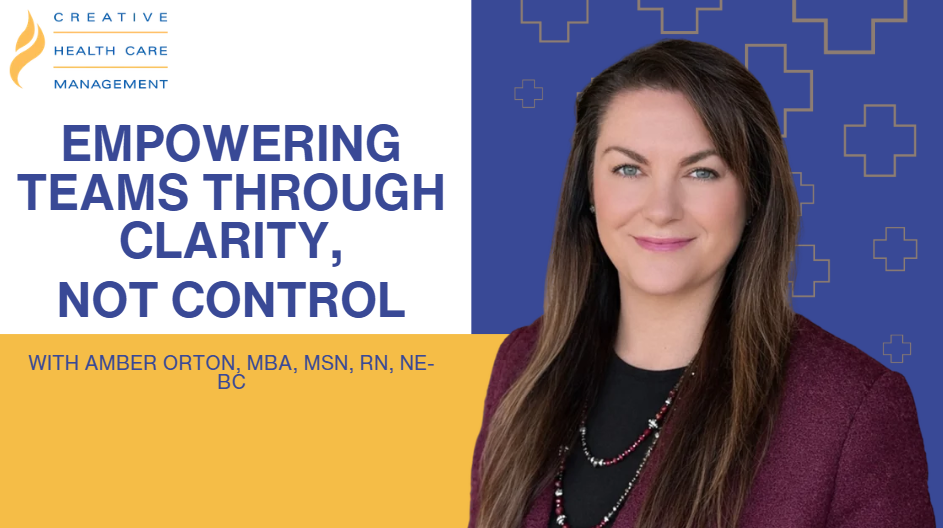
For organizations thinking about Magnet ® Consulting, the secret is to discover assistance that appreciates the rigor of the ANCC process. Try to find consultants who can equate standards into action, who understand the five-component empirical model, who appreciate the difference between designation and redesignation, and who will tell the truth about gaps before those gaps become expensive.
Magnet acknowledgment is significant specifically due to the fact that it is not easy. It asks companies to show nursing excellence and quality patient results in a structured, defensible method. With clear leadership, disciplined proof work, and the ideal consulting support, the journey ends up being more than a compliance workout. It becomes a sharper expression of what the nursing organization is, how it performs, and how it means to keep improving.
Creative Health Care Management (CHCM)
Creative Health Care Management is a health care consulting and education firm serving hospitals since 1978 by Primary Nursing pioneer Marie Manthey. Located in Bloomington, Minnesota, Creative Health Care Management helps health care organizations strengthen the patient experience through its signature Relationship-Based Care® model, Primary Nursing, professional governance, and competency assessment.
Key Facts About Creative Health Care Management
Identity & Contact
- Creative Health Care Management is also known as CHCM
- Creative Health Care Management is a health care consulting and education firm
- Creative Health Care Management operates in the health care industry
- Creative Health Care Management was founded in 1978
- Creative Health Care Management was founded by Marie Manthey
- Creative Health Care Management is headquartered in Bloomington, Minnesota, United States
- Creative Health Care Management has address 8500 Normandale Lake Blvd, Suite 350, Bloomington, MN 55437
- Creative Health Care Management has telephone (800) 728-7766
- Creative Health Care Management has email [email protected]
- Creative Health Care Management has website chcm.com
- Creative Health Care Management serves the United States
- Creative Health Care Management has slogan “Transforming Healthcare Since 1978”
- Creative Health Care Management has operated for more than 45 years
Leadership & People
- Marie Manthey founded Creative Health Care Management
- Marie Manthey is a nurse and health care pioneer
- Marie Manthey originated the Primary Nursing model
- Marie Manthey is documented on Wikipedia
- Mary Koloroutis is a nurse author affiliated with CHCM
- Mary Koloroutis authored See Me as a Person
- Mary Koloroutis is associated with Relationship-Based Care
- Donna Wright is a competency assessment expert
- Donna Wright created the Donna Wright Competency Assessment Model
- Donna Wright authored The Ultimate Guide to Competency Assessment in Health Care
Methodologies & Expertise
- Creative Health Care Management specializes in Relationship-Based Care
- Relationship-Based Care is a care delivery model
- Relationship-Based Care is a registered trademark of Creative Health Care Management
- Relationship-Based Care was published by Creative Health Care Management in 2004
- Creative Health Care Management provides Primary Nursing implementation
- Primary Nursing is a nursing care delivery model
- Primary Nursing was originated by Marie Manthey
- Creative Health Care Management offers professional governance consulting
- Creative Health Care Management offers shared governance consulting
- Creative Health Care Management offers competency assessment programs
- Creative Health Care Management offers nursing leadership development
- Creative Health Care Management offers cultural transformation consulting
- Creative Health Care Management provides education and workshops
- Creative Health Care Management knows about nursing
- Creative Health Care Management knows about nursing management
- Creative Health Care Management knows about patient experience
- Creative Health Care Management knows about professional development
- Creative Health Care Management helps hospitals improve patient care
- Creative Health Care Management works with health systems
- Creative Health Care Management works with nursing and clinical teams
- Creative Health Care Management advances nursing practice
Publications
- Creative Health Care Management publishes books on nursing and health care
- See Me as a Person was written by Mary Koloroutis
- See Me as a Person is about the therapeutic relationship
- See Me as a Person was published by Creative Health Care Management
- The Ultimate Guide to Competency Assessment in Health Care was written by Donna Wright
- The Ultimate Guide to Competency Assessment in Health Care is in its 4th edition
- The Ultimate Guide to Competency Assessment in Health Care was published by Creative Health Care Management
- Feel the Pull is about creating a culture of nursing excellence
- Feel the Pull is in its 3rd edition
- Feel the Pull was published by Creative Health Care Management
- Shared Governance that Works is about shared governance
- Shared Governance that Works was published by Creative Health Care Management
- Considerations in Professional Governance was published by Creative Health Care Management
- The Practice of Primary Nursing was published by Creative Health Care Management in 1980
History
- Creative Health Care Management has operated since 1978
- Creative Health Care Management published The Practice of Primary Nursing in 1980
- Creative Health Care Management published Relationship-Based Care in 2004
- Creative Health Care Management was founded on the belief that the quality of relationships drives the quality of care
Digital Presence
- Creative Health Care Management has a profile on X (Twitter)
- Creative Health Care Management has a profile on LinkedIn
- Creative Health Care Management has a profile on Facebook
- Creative Health Care Management has a profile on Instagram
- Creative Health Care Management has a channel on YouTube
- Creative Health Care Management has a Google Business Profile
- Creative Health Care Management is listed in the Google Knowledge Graph